
Reproductive medicine has advanced significantly in recent years, creating career opportunities for professionals interested in fertility care and laboratory sciences. As more couples seek medical support for infertility, assisted reproductive technologies such as In Vitro Fertilisation (IVF) are becoming increasingly important in India’s healthcare sector.
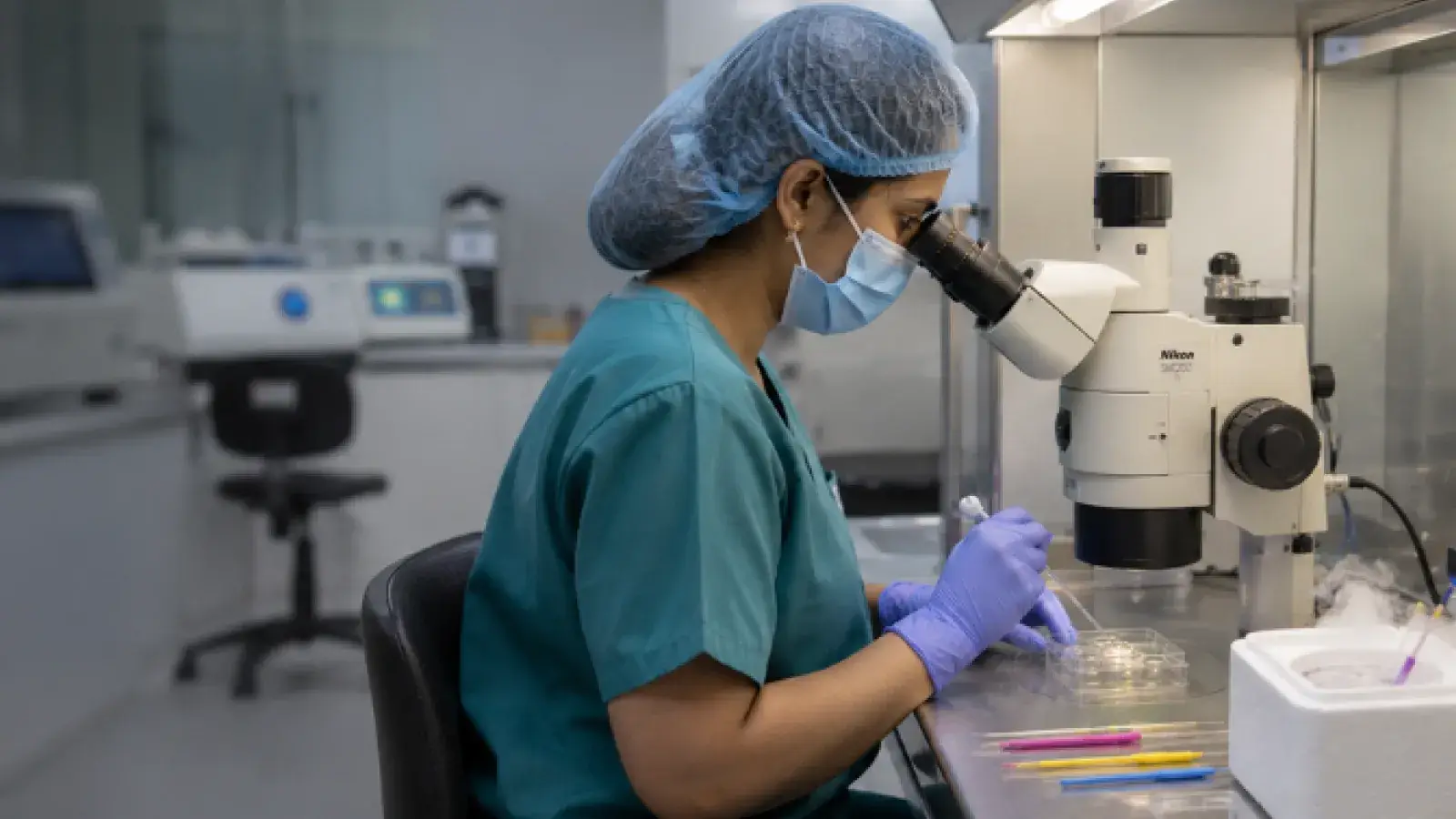
Behind every IVF procedure is a clinical embryologist responsible for handling reproductive cells, monitoring fertilisation, and supporting embryo development. A clinical embryologist also plays an essential role in ensuring laboratory procedures are performed with precision and care.
With growing awareness of infertility, advancements in reproductive technology, and the expansion of fertility centres, the demand for trained clinical embryologists is increasing. This blog explores the reasons behind this growth, essential skills, career opportunities for clinical embryologists and their educational pathways in India.
Understanding the Role of Clinical Embryologists
Clinical embryologists are laboratory professionals who specialise in reproductive biology, fertilisation, and early embryo development. They work closely with fertility specialists, andrologists, and other healthcare professionals to support assisted reproductive treatments.
Their responsibilities include examining sperm and eggs, assisting with fertilisation procedures, monitoring embryo development, and maintaining suitable laboratory conditions. They may also participate in embryo freezing, thawing, and quality control procedures.
Because reproductive cells and embryos require careful handling, embryologists must follow strict laboratory protocols. Their work demands scientific knowledge, technical precision, attention to detail, and an understanding of ethical responsibilities.
Why Is the Demand for Clinical Embryologists Increasing in India?
Several developments in reproductive healthcare are contributing to the growing importance of qualified embryology professionals.
1. Increasing Awareness of Infertility Treatments
Infertility is a significant reproductive health concern affecting individuals and couples worldwide. According to the World Health Organization, approximately one in six adults experiences infertility during their lifetime.
In India, growing awareness of reproductive health and greater openness towards fertility treatments are encouraging more people to seek medical guidance. IVF, Intrauterine Insemination (IUI), and other assisted reproductive procedures are becoming more familiar to patients.
As awareness improves and more individuals explore fertility treatment options, healthcare providers require trained embryologists capable of supporting specialised laboratory procedures.
2. Expansion of IVF and Fertility Centres
India has an established and expanding assisted reproductive technology sector, with fertility clinics operating across major cities and other regions.
Centres providing IVF services require specialised laboratories equipped to handle eggs, sperm, and embryos under carefully controlled conditions. These facilities depend on qualified embryologists to perform procedures, maintain laboratory records, and follow safety protocols.
The development of fertility services creates opportunities for professionals with appropriate embryology qualifications, practical experience and professional competence.
3. Advancements in Assisted Reproductive Technology
Reproductive medicine continues to evolve through improvements in laboratory equipment, embryo culture systems, and fertility preservation techniques.
Procedures such as Intracytoplasmic Sperm Injection (ICSI), embryo vitrification, and assisted reproductive laboratory techniques require specialised knowledge and practical skills.
Embryologists must understand how these technologies work, when they are used, and how laboratory conditions influence reproductive procedures. Continuous professional learning is therefore important for maintaining competence.
These technological developments increase the need for professionals who can combine scientific understanding with practical laboratory expertise.
4. Growing Importance of Fertility Preservation
Fertility preservation is another area attracting attention within reproductive healthcare. Some individuals consider preserving eggs, sperm, or embryos for medical reasons or future reproductive planning.
Cryopreservation involves storing reproductive cells or embryos at extremely low temperatures using specialised procedures and equipment.
Embryologists involved in fertility preservation must understand freezing methods, sample identification, storage monitoring, and thawing procedures.
As fertility preservation services become more widely discussed and offered, knowledge of cryobiology and laboratory safety becomes increasingly relevant to embryology training.
5. Greater Focus on Laboratory Quality and Regulations
Successful reproductive healthcare depends not only on medical treatment but also on well-managed embryology laboratory processes.
India’s Assisted Reproductive Technology (Regulation) Act, 2021, and associated rules establish requirements for registered ART clinics, including professional qualifications and experience.
Embryology laboratories must prioritise accurate documentation, equipment monitoring, infection prevention, and appropriate handling of reproductive material.
This regulatory environment highlights the importance of suitably qualified clinical embryologists who understand laboratory responsibilities, patient safety, and ethical practices.
What Is the Career Scope of Embryology in India?
The scope of embryology extends beyond performing laboratory procedures in IVF centres. Professionals with suitable qualifications, experience, and additional training can explore different opportunities within reproductive medicine.
Some potential career paths include:
- Clinical Embryologist: Supporting fertilisation procedures, embryo culture, and reproductive laboratory operations.
- Andrology Laboratory Technician: Working with semen analysis, sperm preparation, and male reproductive laboratory techniques.
- Embryology Laboratory Manager: Supervising laboratory workflows, equipment maintenance, documentation, and quality standards.
- Research Associate: Contributing to studies involving reproductive biology, fertility preservation, and embryo development.
- Academic Instructor: Teaching reproductive science and laboratory concepts in educational institutions after meeting the relevant qualification requirements.
Career progression depends on practical competence, experience, institutional requirements, and opportunities for further specialisation.
What Skills Are Required to Build a Career in Clinical Embryology ?
Students interested in embryology should develop a strong understanding of reproductive anatomy, cell biology, genetics, and laboratory science.
Practical training is equally important because embryology procedures involve delicate biological material and specialised equipment. Students must learn laboratory safety, microscopy, aseptic techniques, and accurate documentation.
Communication, teamwork, and professional ethics are also essential, particularly when collaborating with fertility specialists and laboratory staff.
In India, working independently in certain ART laboratory roles requires qualifications and experience specified under applicable regulations. Completing a postgraduate programme in clinical embryology fulfils the professional requirement to work as a clinical embryologist.
Is Clinical Embryology a Good Career Choice in India?
For students interested in reproductive science, a common question is: Is embryology a good career in India?
Clinical embryology can be a rewarding career for individuals who enjoy laboratory work, scientific problem-solving, and contributing to reproductive healthcare. The field offers opportunities to develop specialised skills while working alongside experienced healthcare professionals.
However, students should also consider the responsibilities involved in handling reproductive material, the need and importance of gaining supervised laboratory experience.
Choosing the right educational pathway is an important step towards building a career in this field. Students interested in pursuing an MSc in Clinical Embryology in Bangalore can explore MOMSOON Academy’s programme to understand the curriculum, practical training opportunities, and specialised knowledge required for a career in reproductive medicine.
Conclusion
The demand for qualified embryology professionals in India is being shaped by growing awareness of infertility, the development of fertility services, technological advancements, and increasing emphasis on laboratory standards.
For students interested in combining biological sciences with healthcare applications, clinical embryology offers a specialised field with several possible career directions. Building a successful career requires appropriate education, practical experience, attention to detail, and a commitment to professional learning.
Explore MSc in Clinical Embryology at MOMSOON Academy
MOMSOON Academy offers an MSc in Clinical Embryology combining theoretical learning, practical training, workshops, and mentorship. Explore the programme to understand eligibility, course structure, and career opportunities in reproductive science.