
Choosing a career in fertility and reproductive health can feel exciting and confusing at the same time. Two careers that many students hear about are Embryologist and IVF Specialist. Both work in fields related to IVF and fertility treatment, but their roles are very different.
This blog explains what each professional does, what qualifications they need, and the paths students can take to build a successful career. By the end, you will have a solid idea of what these careers involve and which one may fit your interests and goals.
Embryologist vs IVF Specialist: Understanding the Core Difference
The primary difference lies in the area of responsibility and professional focus.
An Embryologist works within the IVF laboratory, handling eggs, sperm, and embryos with precision and care. Their role is centered on scientific procedures such as fertilization, embryo monitoring, and maintaining strict lab conditions.
An IVF Specialist, on the other hand, is a qualified medical doctor who manages patient diagnosis, treatment planning, and clinical procedures. They interact directly with patients and guide the overall treatment journey.
Although both work toward the same goal, their training, daily tasks, and work environments clearly differ.
Where do they work?
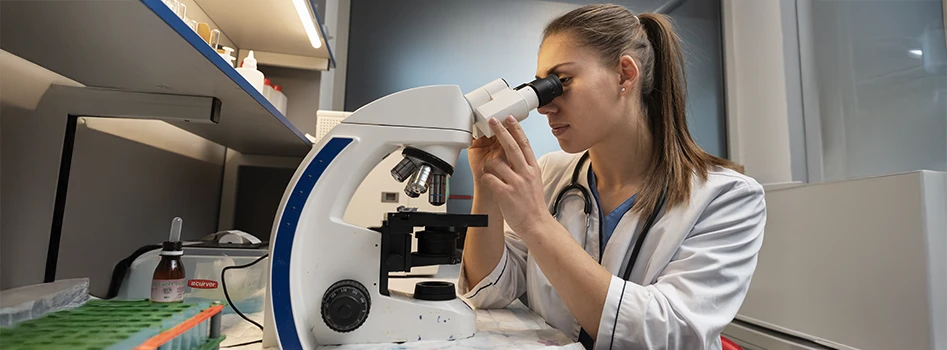
An embryologist spends most of the day inside a lab. Their focus is on microscopes, culture dishes, incubators, and embryo growth. They carefully handle delicate cells and monitor development day by day.
An IVF specialist works mainly in clinics and hospitals. Their focus is on patients. They conduct consultations, check reports, guide medication, and perform procedures like egg retrieval and embryo transfer.
Students who prefer working with laboratory techniques and handling biological samples may find embryology more suitable. Those who wish to diagnose, treat, and guide patients through medical care may consider becoming an IVF specialist.
What do they actually do
During an IVF cycle, both professionals work closely together, but their roles differ at each step.
The IVF Specialist begins the process by evaluating the patient, prescribing medications, and performing procedures such as egg retrieval. Once the eggs are collected and moved to the laboratory, the Embryologist takes responsibility.
- Prepares and examines eggs and sperm
- Performs fertilization through IVF or ICSI
- Observes embryo development daily
- Identifies strong embryos for transfer
- Freezes embryos when required
- Maintains controlled lab conditions
- Identifies fertility concerns
- Designs treatment protocols
- Administers hormonal therapy
- Conducts egg retrieval
- Performs embryo transfer
- Supports patients throughout treatment
The IVF specialist is responsible for patient diagnosis and medical treatment, while the Embryologist focuses on the laboratory procedures that support embryo development.
Skills required in both careers
While both roles work in fertility treatment, the skills required are quite different.
- Embryologists work behind the scenes in the lab. They need sharp focus, scientific knowledge, and steady hands to handle delicate embryos.
- IVF specialists work directly with patients. They need strong medical expertise, confidence in making decisions, and the ability to guide couples with care and empathy.
If you are someone who likes careful lab procedures and scientific accuracy, embryology may feel more comfortable. If you enjoy speaking with patients and solving medical problems, IVF specialization may suit you better.
Career growth and opportunities
- Junior Lab Technician
- Assistant Embryologist
- Clinical Embryologist
- Senior Embryologist
- Lab Director or Research Specialist
- Junior Doctor
- Gynecologist
- IVF Consultant
- Senior Fertility
- Specialist
- Clinic Head or Owner
The road to becoming an IVF specialist is longer and academically intensive, as it demands complete medical qualification.
For graduates from a science background looking for a practical and laboratory-focused career in fertility care, clinical embryology can be a more accessible and skill-driven choice. Both professions are promising, but they evolve in distinct professional directions.
Why Many Students Are Choosing Embryology Today
Clinical embryology is becoming a strong career choice for life science graduates because fertility problems are increasing worldwide. According to the World Health Organization, about 1 in 6 people face infertility, which has increased the need for fertility treatments.
As more clinics open to meet this demand, trained embryologists are needed. Embryology offers a stable, science-based career with clear long-term growth in reproductive healthcare.
Conclusion
Both careers contribute to successful fertility outcomes, but the responsibilities and education requirements differ. IVF Specialists follow a medical pathway, while embryologists specialize in laboratory science and embryo handling. If you are committed to working in reproductive laboratories and developing technical expertise, embryology offers a stable and specialized direction
Through hands-on programs and expert mentorship, Momsoon Academy equips students with industry relevant skills. Take a clear step toward a future in reproductive healthcare.